Zanubrutinib for IgG4-related disease
Last updated Oct. 16, 2025, by Michela Luciano, PhD
 Fact-checked by Marta Figueiredo, PhD
What is zanubrutinib for IgG4-RD?
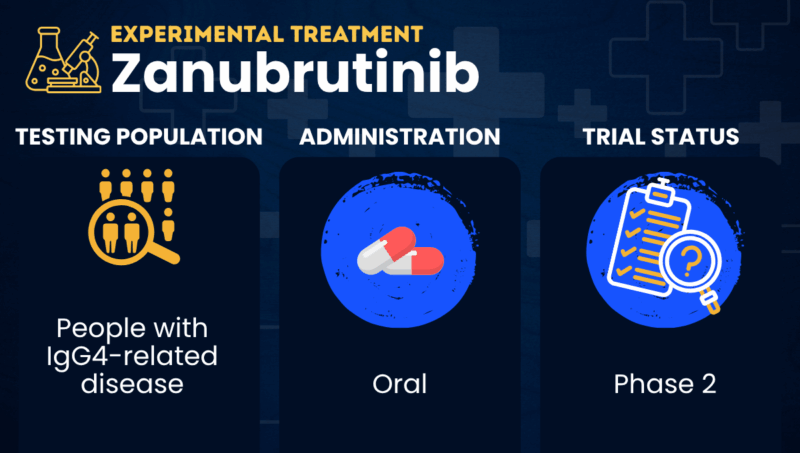
Zanubrutinib is an oral therapy that is being evaluated as a possible treatment for people with immunoglobulin G4-related disease (IgG4-RD).
In IgG4-RD, immune cells, especially B-cells that produce large amounts of the IgG4 antibody, build up in tissues and trigger inflammation and scarring.
Developed by Beone Medicines, formerly Beigene, zanubrutinib is designed to block Bruton’s tyrosine kinase (BTK), an enzyme that B-cells and other immune cells need for their survival, growth, and activation. By toning down the overactivity of these immune cells, the therapy aims to ease inflammation and prevent the tissue damage that drives IgG4-RD symptoms.
As a next-generation BTK suppressor, zanubrutinib was engineered to show higher selectivity toward BTK, which may lower the risk of side effects from the drug binding to other targets in the body it wasn’t meant to affect.
In the U.S. and other regions, the therapy is approved under the brand name Brukinsa for specific blood cancers that affect immune B-cells, such as chronic lymphocytic leukemia and certain lymphomas. Zanubrutinib is also being assessed as a potential treatment for IgG4-RD.
Therapy snapshot
Scroll horizontally to view all columns -->
| Treatment name: | Zanubrutinib |
| Administration: | Tested in IgG4-RD as oral capsules |
| Clinical testing: | Completed a Phase 2 clinical trial, with promising safety and efficacy signs |
How will zanubrutinib be administered in IgG4-RD?
In the only clinical trial testing zanubrutinib in people with IgG4-RD to date, the therapy was given as 80 mg oral capsules, taken twice daily.
Zanubrutinib in IgG4-RD clinical trials
The safety and efficacy of zanubrutinib in people with IgG4-RD have been evaluated in a small, proof-of-concept, investigator-sponsored Phase 2 clinical trial (NCT04602598). Conducted at a single U.S. site, the study involved 10 people, ages 18 to 85, with disease involving the lacrimal, or tear, gland and/or the submandibular, or major salivary, gland.
All had previously shown an inadequate response to glucocorticoids, which are the standard first-line IgG4-RD treatment, but whose long-term use is associated with serious side effects.
Participants had received zanubrutinib as oral capsules, 80 mg twice daily, for 24 weeks, or about six months. No glucocorticoids or other immunosuppressive drugs were given at enrollment or during the study.
The trial’s main goal was to assess changes in the volume of the lacrimal and submandibular glands. Secondary goals included changes in the glands’ metabolic activity, levels of IgG4 and other disease biomarkers, and validated measures of IgG4-RD severity. The proportion of participants with disease flares, as well as patient-reported outcomes, were also secondary goals. The study also monitored the therapy’s safety.
Top-line data have been submitted for presentation at an upcoming scientific meeting. According to the submitted abstract, six months of zanubrutinib treatment led to a significant reduction in:
- lacrimal gland volume, by a mean of 45.4%
- submandibular gland volume, by a mean of 30%
- metabolic activity within affected glands on PET scans, consistent with less inflammation and lower disease activity
- blood IgG4 levels
While full trial results haven’t been made available or published as yet, the researchers believe that these promising findings support further testing of zanubrutinib as a potential IgG4-RD treatment.
Zanubrutinib side effects in IgG4-RD
Because full data from the single trial evaluating zanubrutinib in people with IgG4-RD have not been published to date, the therapy’s side effect profile remains unclear in this patient population. Available data suggest that most adverse events reported during the study were mild in severity.
IgG4-RD News is strictly a news and information website about the disease. It does not provide medical advice, diagnosis, or treatment. This content is not intended to be a substitute for professional medical advice, diagnosis, or treatment. Always seek the advice of your physician or other qualified health provider with any questions you may have regarding a medical condition. Never disregard professional medical advice or delay in seeking it because of something you have read on this website.