Monitoring mild IgG4-RD symptoms: A guide to effective communication
 Fact-checked by
During mild or stable periods with IgG4-related disease (IgG4-RD), it can be tempting to downplay or ignore minor symptoms. But small changes can sometimes be the first clues that your disease is flaring. Being vigilant about noticing them early doesn’t mean living in dread. It means staying one step ahead and helping your care team respond if your disease activity changes.
Why even mild IgG4-RD symptoms need monitoring
IgG4-RD is a rare, chronic condition that causes immune cells to build up in tissues throughout the body. This leads to inflammation that can result in scarring and masses that damage otherwise healthy organs. It can progress silently without causing many, or any, symptoms for a long time. It can also enter periods of remission before flaring again later.
Recognizing and treating potential flares early on can help reduce the risk of organ damage. That’s why it’s important to stay on top of your symptoms once you’ve been diagnosed with IgG4-RD. Tracking even minor shifts can help you notice patterns and trends to share with your care team and help make sure you get the treatment you need.
Spotting small changes and potential flares
Early symptoms of an IgG4-RD flare depend on the tissues and organs affected, but may include:
- swelling
- fatigue
- pain
- unexplained weight loss
- digestive discomfort
Because these symptoms can be mild and may also be caused by other conditions, it can be difficult to determine whether they are specifically related to IgG4-RD. However, tracking IgG4-related disease symptoms over time can help you see patterns or trends. This, in turn, can help you tell the difference between an occasional off day and a possible flare.
Tracking this information also gives you details to share with your doctor. Being able to tell them when a symptom started, how often it happens, and whether you see any possible explanations for it — such as a change in diet or poor sleep — can be very useful.
To spot potential flares, you can try doing a daily 60-second self-scan of different areas of your body, including your:
- Head and neck: Take note of any headaches, and check for swelling, especially near the salivary glands. This may cause your neck to look puffy, though you may not experience any pain.
- Eyes: Check for painless swelling of your eyelids, which may result in a puffy or droopy appearance. Also monitor for new or worsening dry eyes.
- Mouth: Look for signs of dry mouth.
- Abdomen: Monitor any new or worsening gastrointestinal symptoms, such as abdominal pain or discomfort.
You can also look for other general symptoms, such as fatigue, unexplained weight loss, and a general feeling of malaise.
How to keep a symptom log
While it might be tempting to just keep a mental list of your symptoms, it can be helpful to keep a written or digital log instead. That way, you’ll have something specific to reference when communicating IgG4-RD symptoms to your healthcare team. You’ll also be able to spot trends in your symptoms over time.
There are various symptom tracking apps available, or you can create a written log. You may find it useful to track your symptoms daily, but if that’s too much for you, you can also get a good idea of trends by choosing just a few days to track each week.
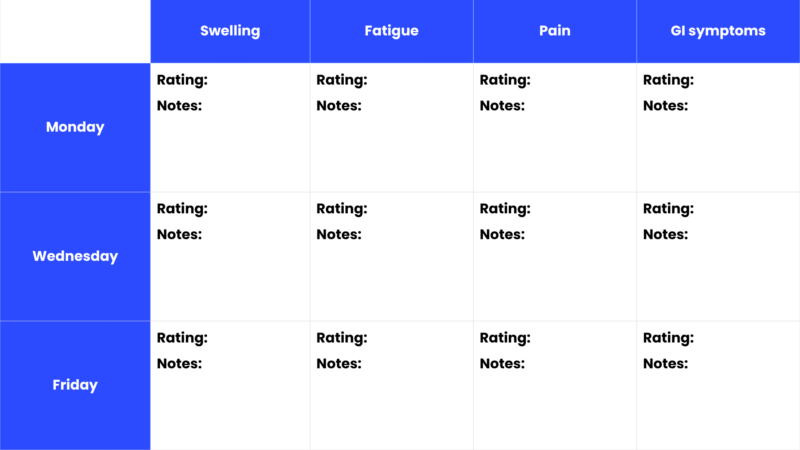
For example, you could decide to track your IgG4-related disease symptoms on Mondays, Wednesdays, and Fridays. Create a table with a few key areas of concern, and then score your symptoms on a scale from 1 to 5, with 1 being barely noticeable, and 5 being very noticeable or bothersome. You can also take notes on possible triggers.
Tips for talking clearly with your care team
Visits with your healthcare team can be quite brief. Sometimes, you may only have 15 minutes allotted for a quick follow-up.
To make the most of your time:
- Come with a clear goal in mind. What is the most important or pressing thing you want to be sure you discuss?
- Prepare a quick list of questions for your doctor. Have this handy during your appointment.
- Bring your symptom log with you, and show it to your doctor at the start of the appointment.
For example, you could say something like, “I’ve been logging my symptoms since our last appointment, and I’ve noticed that over the past four weeks I’ve gone from occasional stomach pain to symptoms four or five days each week. Here’s my log. Are there any tests you recommend? I’d like to make sure my care plan keeps up with the changes I’m seeing.”
When a symptom needs faster medical attention
Be sure to give your clinic a call and get medical attention if you experience sudden or severe symptoms, such as:
- jaundice (yellowing of the skin or eyes)
- severe or persistent abdominal pain
- severe back or flank pain
- significant drop in urine output
These symptoms warrant prompt medical evaluation, so don’t delay. Remember, your healthcare team is there to help you, and they’re best able to do that when you’re honest and open about how you’re feeling.
Essential next steps for patients
Here are some actionable steps you can take now as you begin monitoring mild IgG4-RD symptoms.
- Print out the symptom log from this article, or download a tracking app. Spend a few minutes logging how you feel today.
- Commit to at least three days a week for symptom logging, and set a calendar alert to remind yourself to do so.
- Review your log once a week and see what trends you notice.
- If you’re experiencing sudden or severe symptoms, seek prompt medical attention. Otherwise, be sure to bring your symptom log to your next appointment.
Following these simple steps can help you advocate for your care and keep track of changes in your IgG4-RD.
IgG4-RD News is strictly a news and information website about the disease. It does not provide medical advice, diagnosis, or treatment. This content is not intended to be a substitute for professional medical advice, diagnosis, or treatment. Always seek the advice of your physician or other qualified health provider with any questions you may have regarding a medical condition. Never disregard professional medical advice or delay in seeking it because of something you have read on this website.