
IgG4-RD changed my relationship with my body; nobody prepared me for that
This disease rewrote the way I see myself, and the way I move through the world
Written by |
IgG4‑related disease didn’t just infiltrate my organs; it infiltrated my self‑image. It rewrote the way I see myself, the way I move through the world, and the way I feel in my own skin.
Chronic illness is usually framed as a medical journey, but I want to acknowledge the physical identity crisis that comes with it. The disorienting shift from the body I once recognized to the body I suddenly had to learn how to live in.

Tracking my deterioration
My skin became the first battlefield. Texture changes, nerve damage, sensitivity, hyperpigmentation, lesions, and nodules appeared without warning. Mikulicz syndrome reshaped my face, but things didn’t stop there. Psoriatic eruptions spread across my face and neck, prurigo nodularis clustered around my jawline and neck glands, and severe eczema and lesions appeared across my body.
There’s a particular kind of emotional sting that comes with looking inflamed and spotty, with watching your skin display a disease most people have never heard of. I used to joke that I had a constellation map on my body, and under UV light, that’s exactly what it looks like — clusters of both old and new spots glowing like stars. The joke made it easier to talk about, but it didn’t make it easier to live with. Every flare left a mark, and every mark changed the way I saw myself.
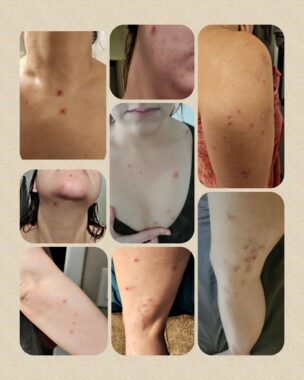
Mahsa Pazokifard displays a number of the changes she experienced on her skin as a result of IgG4-related disease, including eruptions that occurred on her face, neck, chest, arms, and legs. (Courtesy of Mahsa Pazokifard)
Then came the weight gain that my immune system and medications decided on without my consent. Chronic inflammation and steroids sabotage the body in ways that feel both dramatic and humiliating. Moon face. Sudden weight gain and puffiness all over. The neck hump. Swelling that makes your silhouette look unfamiliar even in clothes you’ve worn for years.
These sides of living with IgG4‑RD become public‑facing symptoms. They’re visible changes that strangers notice before they know anything about your disease. And because weight is so deeply moralized, people assume it’s my lifestyle choices instead of biology. They assume laziness instead of inflammation and fatigue. They assume overeating instead of prednisone.
Meanwhile, exhaustion from physical exertion makes it nearly impossible to work out the way people suggest I do. When my body is already fighting itself, exercise becomes another battlefield, not a solution. So I internalize blame for something biological. I carry shame for something I didn’t choose. I apologize for changes I didn’t cause.
The exhaustion of tracking my own deterioration visually becomes its own kind of fatigue. It’s a constant monitoring of what the disease and medications are doing to me on the outside, even as I’m trying to manage what they’re doing on the inside.
The grief beneath
And beneath all of that is grief. Grief for the body I used to have. Grief for the ease I used to feel in my own skin. Grief for the version of myself that once didn’t have to think about any of this.
Chronic illness didn’t just change my health; it changed my identity. Losing my old self‑image and feeling betrayed by my own body forced me to rebuild my identity around instability. So I built it around my symptoms, flares, and unpredictability. But eventually, I had to learn how to be seen again, and on my own terms. Not through the lens of inflammation or weight gain, or the assumptions people make about skin or fatigue. Not through the distortions of IgG4‑related disease.
I learned to reclaim my visibility, to redefine beauty on my own terms, even as I learned to inhabit a body that changed without asking my permission. I guess that is another silent truth about IgG4‑RD: It forces you to rebuild the relationship you have with yourself, piece by piece, flare by flare, change by change, until you finally recognize that your identity hasn’t been lost. It’s been evolving.
Note: IgG4-RD News is strictly a news and information website about the disease. It does not provide medical advice, diagnosis, or treatment. This content is not intended to be a substitute for professional medical advice, diagnosis, or treatment. Always seek the advice of your physician or other qualified health provider with any questions you may have regarding a medical condition. Never disregard professional medical advice or delay in seeking it because of something you have read on this website. The opinions expressed in this column are not those of IgG4-RD News or its parent company, Bionews, and are intended to spark discussion about issues pertaining to IgG4-RD.




Leave a comment
Fill in the required fields to post. Your email address will not be published.