

















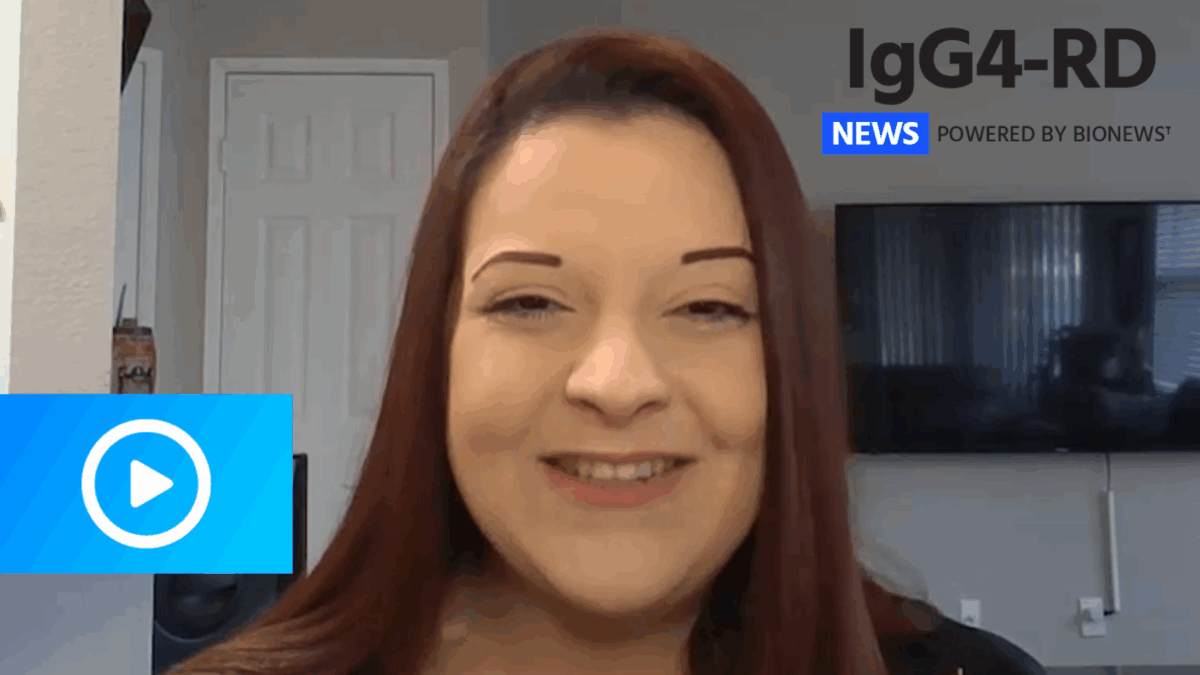
Mahsa Pazokifard, who lives in Orange County, California, was diagnosed with IgG4-related disease in 2022. She describes a lifelong struggle with unexplained symptoms, medical dismissal, and ultimately the empowerment that came from advocating for her own diagnosis.
Transcript
So I have had symptoms of IgG4-RD as long as I can remember. Starting with ENT infections since infancy. Severe dehydration, and dry skin in early childhood, I had dry, cracked skin and I also was having trouble with my teeth all at the same time — and very rapidly at such a young age.
But nothing ever really came out of any of these. The time we followed up with the doctors, there wasn’t really much they could do or say. It was just a random occurrence that was happening.
By age 9, I was having trouble breathing. I would wake up unable to breathe on my own. I was having a lot of issues with coughing, which was also out of nowhere at a young age. That took years. I was missing school. Every now and then I was having fevers and my skin was acting like jaundice. There was a yellow tint to it.
My blood tests were always fine, my vitals were always fine, and so they would just say it’s another random occurrence. It will just go away on itself.
When you have autonomic dysfunction, really nobody knows how to handle that. And that’s what was happening. I didn’t get the right care. I was called crazy. And when that happens, they put it on your medical file. It’s going to get harder for you to even carry on, to go see another specialist and to try to get that figured out and get a diagnosis.
I was lucky enough to get in with one of the ophthalmologists through connections who said, “I’ll do the biopsy, but I’m sure you’ve looked into it. What do you think it is?” And nobody has ever asked me that. One surgeon saying — that’s huge for me. I told them, I said, “It’s mecalux.”
Mecalux is an IgG4-RD disease. It’s the multiglandular involvement of head and neck glands. But I was actually going through — it was every single gland was involved for me from the neck down.
They were very hesitant on doing these biopsies and I was pushing for it because I knew for a fact that they were going to show up — and they did. Every single biopsy confirmed what I had told them to look for, and that moment was just so empowering for me.
After years and years of being called crazy — it’s all in your head. There’s nothing wrong with you. Your blood work’s fine, your vitals are fine. Here’s the proof. Nothing was fine. Everything was what I said it was. And that made me feel very empowered in that moment.