IgG4-RD treatment side effects and management
 Fact-checked by
 The treatments used to manage immunoglobulin G4-related disease (IgG4-RD) effectively control the condition for most patients, but as with any medication, they come with possible side effects.
In IgG4-RD, immune cells infiltrate tissues and cause inflammation and scarring, although the underlying causes of this immune dysfunction are not known. The process can occur in essentially any tissue, leading to a wide range of symptoms and clinical profiles.
The goal of an optimal IgG4-RD treatment plan is to maintain disease control while reducing the side effects of IgG4-RD medications, which can negatively impact quality of life. Patients should be vigilant for side effects and promptly communicate them to their healthcare team so they can be appropriately managed and the treatment plan adjusted as needed.
Common treatments used in IgG4-RD
IgG4-RD medications aim to control the abnormal immune activity that drives disease-related inflammation. The goal is to prevent periods of worsening disease activity (relapses) and sustain remission, where the disease is well-controlled and symptoms ease or stabilize.
The first-line approach is usually a course of oral glucocorticoids, often simply referred to as steroids. They’re usually taken at a high daily dose for a few weeks, and then slowly tapered off.
Other medications that might be used include:
- Uplizna (inebilizumab-cdon) or rituximab, which work to lower the levels of B-cells, a class of immune cells believed to contribute to disease-driving inflammation
- conventional immunomodulatory drugs, such as azathioprine, mycophenolate mofetil, and methotrexate, which work in various ways to broadly suppress the immune system
Common side effects by treatment type
While the medications used to treat IgG4-RD successfully control the immune activity that drives the disease, this immunosuppression also compromises the body’s usual ability to fight off harmful invaders.
As such, there is an infection risk with IgG4-RD treatment, especially with long-term use. Other IgG4-RD treatment side effects depend on the medication, dose, and duration of treatment.
Possible glucocorticoid side effects in IgG4-RD include:
- increased appetite and weight gain
- fluid retention, leading to puffiness or swelling
- insomnia or restlessness
- mood and cognitive changes, such as anxiety, irritability, or difficulty concentrating
- indigestion or other gastrointestinal problems
- increased sweating
- skin changes, such as acne or bruising
- muscle weakness
- metabolic issues, which can include high blood sugar or diabetes and high blood pressure
- bone problems
- eye problems
Many of these side effects are more likely to emerge or become serious with long-term steroid use.
Other IgG4-RD treatments are commonly considered steroid-sparing agents, meaning they’re used to reduce the need for glucocorticoids and lower the long-term risks of IgG4-RD treatment. However, these medications also come with their own risks.
- Uplizna and rituximab side effects in IgG4-RD may include infusion-related reactions during or shortly after treatment, which could be severe in some cases.
- Conventional immunosuppressant side effects can vary widely by specific medication, but may include gastrointestinal problems, fatigue, headache, and hair thinning.
Managing treatment side effects
While some side effects may be unavoidable, there are steps that can be taken to help minimize and manage them.
Lifestyle
Certain lifestyle changes might help some individuals cope with the side effects of IgG4-RD treatment.
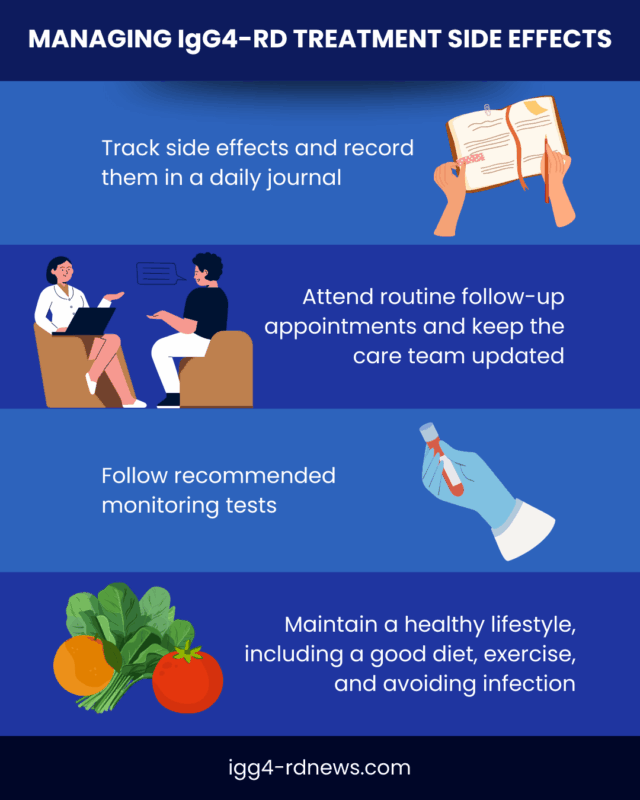
- Establish a routine. For example, taking steroids in the morning can help avoid sleep problems, and taking them with meals may help with gastrointestinal issues.
- Eat a balanced diet. A healthy, well-balanced diet can help combat inflammation and manage certain side effects of steroid treatments, such as swelling, weight gain, and high blood pressure. A doctor may also recommend supplements, such as calcium or vitamin D, to support bone health.
- Stay active. Regular physical activity can help prevent weight gain and combat muscle loss associated with steroid use.
- Avoid infections. Practicing good hygiene (e.g., frequent hand-washing), wearing masks in crowded places, avoiding people known to be sick, and getting recommended vaccinations can help prevent infections.
Patients should always discuss any lifestyle changes with their healthcare team before implementing them to make sure it’s safe to do so.
Monitoring and medication adjustments
A person’s doctor may recommend IgG4-related disease treatment monitoring for potential side effects, including:
- blood pressure and blood sugar testing
- bone health tests, and blood tests
- tests to evaluate immune cell counts and antibody levels
If side effects emerge that are unsafe or intolerable, dose adjustments may be necessary. Managing steroid side effects may also involve switching to another medication.
Patients should only adjust their medication regimen under the supervision of their doctor. Abruptly stopping or changing the dose of steroids or other treatments can be unsafe.
Mental health and emotional support
Living with IgG4-RD treatment side effects may cause emotional distress.
Mental health support is a key aspect of managing the impact of IgG4-RD treatment. Patients should talk with their care team about resources, such as therapy, counseling, or support groups, that can provide an outlet to talk through experiences and come up with strategies for coping with IgG4-RD medication effects.
When to contact your healthcare team
Appropriately managing IgG4-RD treatment side effects relies on prompt and thorough communication, so patients should be sure to maintain a regular follow-up schedule with their healthcare providers. It’s also a good idea to keep a side effect diary to make it easier to update the care team as issues arise.
Some side effects are serious — and potentially life-threatening — so patients shouldn’t wait until a routine appointment to let a care provider know about them. Symptoms that require urgent medical attention include:
- signs of infection, such as a very high fever, severe chills or shivering, pain during urination, mouth sores, severe sore throat, and wounds that are warm, red, or swollen
- signs of an allergic reaction, like swelling in the face, tongue, or throat, difficulty breathing, chest pain, irregular heartbeat, dizziness, or fainting
- extreme thirst or hunger, confusion, rapid breathing, and breath that smells sweet or fruity, which can signal severe high blood sugar
- bloody, black, or tarry stool, blood or coffee ground-like material in vomit, and sudden or severe stomach pain, which could all be signs of gastrointestinal bleeding
- seizures, severe confusion, bad headaches, and sudden mood changes such as severe depression or hallucinations, which could indicate a neurological emergency
Patients should also alert a care provider if they experience any other new or unexpected side effects.
Even when side effects occur, patients should never abruptly stop their medications without talking to their doctor. Stopping steroids too suddenly can lead to a serious and potentially life-threatening complication called adrenal crisis.
Long-term management and follow-up
In the long-term following an IgG4-RD diagnosis, the IgG4-RD management plan must balance the need for disease control with the potential side effects and risks of the medications. The ultimate goal is for patients to achieve stable disease remission while maintaining a good quality of life without intolerable treatment side effects.
This may be a continuously evolving process, and a patient’s needs could shift over time. It’s critical to regularly meet with the healthcare team for IgG4-RD follow-up care, to reassess needs, and to make adjustments to the care plan as necessary. Given the multisystemic nature of IgG4-RD, this will likely involve integrated care from a multidisciplinary team.
IgG4-RD News is strictly a news and information website about the disease. It does not provide medical advice, diagnosis, or treatment. This content is not intended to be a substitute for professional medical advice, diagnosis, or treatment. Always seek the advice of your physician or other qualified health provider with any questions you may have regarding a medical condition. Never disregard professional medical advice or delay in seeking it because of something you have read on this website.