
Turning to kintsugi to help me process living alone with chronic illness
Our cracks show where we've healed ourselves, over and over
Written by |
There’s an art form in Japan called kintsugi, which entails repairing broken pottery with lacquer mixed with gold or silver so that the cracks don’t disappear. Instead, they become part of the design.
I think about kintsugi a lot, because chronic illness doesn’t just break you once. It does so in tiny, repeated ways: a little fracture every time your body changes the rules, every time a plan collapses, every time you have to be “fine” in public while quietly falling apart in private. And then you piece yourself back together again. You’re still cracked, still valuable, and somehow still standing.
I’m a divorced woman in my 30s, living a solo life while navigating immunoglobulin G4-related disease (IgG4-RD) and other lifelong chronic autoimmune and neurological diseases. I’m telling this story because the reality of being sick and alone is a conversation we tend to avoid until it becomes an emergency.

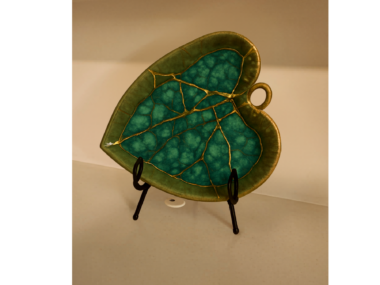
A kintsugi marble pottery plate. (Photo by Mahsa Pazokifard)
When you’re your own partner, so to speak, there is no handoff when things need to be done. If I’m sick, I still have to refill prescriptions, manage appointments, track symptoms, double-check paperwork, and make calls. All of this requires energy I don’t have.
When I’m flaring, I still must eat, shower, and get through the day, because no one is in the next room to notice that I’m fading.
People don’t always understand that being a “strong patient” often means doing multiple jobs at once. This includes being a:
- Provider. I have to figure out how to keep a roof over my head and the lights on while my body treats basic tasks like a marathon.
- Caregiver. I must monitor myself, advocate for myself, and make decisions when my brain feels foggy and my nervous system is on fire.
- Partner. I’m the one who comforts, motivates, and talks myself down when I’m scared, because no one else is there to do it consistently.
I try to stay positive. I try to be light. I try to show up with humor and hope, because I don’t want illness to be the only language I speak. But I also need to say this plainly: It shouldn’t be this hard to survive.
Some days, I’m simply overwhelmed by logistics. On those days, the emotional weight isn’t even the worst part. The worst part is how nonstop everything is. My body doesn’t give me a weekend off or a vacation from my symptoms.
There is no “I’ll deal with that tomorrow,” because tomorrow comes with the same pain and fatigue, and a new email thread that needs an answer.
Yet, here’s the complicated truth: I’ve built something out of what has repeatedly tried to break me. That’s where kintsugi comes in.
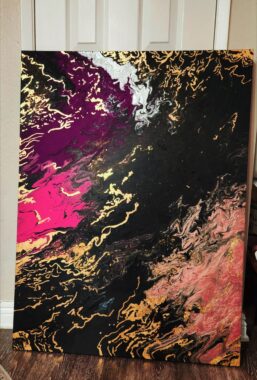
Columnist Mahsa Pazokifard decided to add gold to one of her abstract paintings in a nod to the Japanese art form kintsugi. (Photo by Mahsa Pazokifard)
I’ve been bruised, torn, and shattered in ways I never expected. But I’ve also learned how to rebuild. I’ve learned how to walk into a room and speak anyway. I’ve learned how to protect my heart without turning it to stone. I’ve learned that resilience isn’t a personality trait; it’s a practice I repeat because I have to.
I don’t share this to be considered inspiring. I share it because there are people living this same “solo dolo” reality, quietly, thinking they’re failing because they’re exhausted. You’re not failing. You’re carrying what was never meant for one set of shoulders.
If you’re reading this as a patient who does it all alone, I want you to hear me: Your cracks don’t make you less than. They show where you’ve healed yourself over and over, when no one else could.
If you’re someone who loves a patient, here’s something you can do that matters more than advice: Be a second set of hands. Don’t just say, “Let me know if you need anything,” but offer real, specific help, such as by offering rides, preparing meals, doing paperwork, sitting nearby during a rough night, or checking in without making your loved one perform strength for you.
Healing isn’t always about getting better. Sometimes it’s simply about being pieced back together with gold in the cracks. It’s about golden scars and stubborn grace.
Note: IgG4-RD News is strictly a news and information website about the disease. It does not provide medical advice, diagnosis, or treatment. This content is not intended to be a substitute for professional medical advice, diagnosis, or treatment. Always seek the advice of your physician or other qualified health provider with any questions you may have regarding a medical condition. Never disregard professional medical advice or delay in seeking it because of something you have read on this website. The opinions expressed in this column are not those of IgG4-RD News or its parent company, Bionews, and are intended to spark discussion about issues pertaining to IgG4-RD.


Leave a comment
Fill in the required fields to post. Your email address will not be published.